If you’re running a last-mile delivery business—whether that’s dropping off groceries, packages, or restaurant meals for local shops—you’ve probably asked yourself: “How much stuff can my four-wheel delivery EV actually carry?” As a supplier of these exact vehicles, I get this question all the time, and it’s way more complicated than just slapping a number on the side of a van. The maximum cargo volume isn’t a one-size-fits-all stat; it depends on what you’re delivering, how you’re using your vehicle, and even the tiny design choices we build into our rigs. Let’s break this down, no jargon, just real talk from someone who sells these things every day. Four Wheel Delivery Electric Vehicle
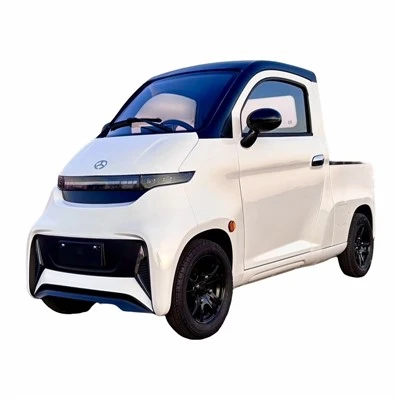
First, let’s start with the basics: what even counts as a four-wheel delivery EV here? I’m not talking about tiny electric scooters that only hold a handful of envelopes—those are for errand runs, not full route work. I mean the ones with four wheels, enclosed cabins, electric motors, and built from the ground up for carrying cargo, not people hauling. Think of them as the middle ground between a tiny two-wheel scooter and a full-sized electric cargo van. That sweet spot has turned into the go-to for so many small to mid-sized delivery companies because they’re cheaper to run than full vans, easier to maneuver in crowded cities, and way better on the environment than gas-powered trucks.
Now, the cargo volume. Let’s get the numbers out first, then explain why they’re not random. For most standard four-wheel delivery EVs (the ones we supply), the maximum cargo volume usually lands between 250 cubic feet (7.08 cubic meters) and 500 cubic feet (14.16 cubic meters). Wait, that’s a wide range, right? A lot of people hear 250 and think “that’s not much for a day of deliveries,” but let’s be honest—your average delivery driver doesn’t need to stuff a couch in there. Let’s put that number in perspective: 250 cubic feet is roughly the size of a large walk-in closet, or about 10 standard moving boxes. The upper end, 500 cubic feet, is closer to a small bedroom, enough for like 20 standard boxes or a mix of 15 meal delivery coolers plus some additional packaging.
But here’s the thing: that’s the theoretical maximum we list on our spec sheets, and it’s not just the size of the cargo hold. There are two big factors that mess with what you can actually fit: the shape of the cargo and the weight limit. A lot of new buyers miss this—volume is space, but if you’re carrying heavy stuff, you can’t fill every inch. Let’s say you’re delivering bottled water or canned goods, which are super heavy. A four-wheel delivery EV has a maximum payload weight, usually around 1,500 pounds (680 kg) for the bigger models. If your cargo is all heavy, you might only fit 300 cubic feet of it before you hit the weight limit, even though there’s 50 cubic feet of empty space left. On the flip side, if you’re delivering lightweight, bulky stuff like soft goods, blankets, or lightweight packaging materials, you might be able to hit that 500 cubic foot mark with no problem, because it doesn’t weigh much.
We’ve also built a lot of little design tweaks into our vehicles to maximize usable cargo space, not just the number we put on a spec sheet. For example, we don’t have a big chunky front engine compartment like a gas van, because it’s electric. That frees up more space in the cargo area than you’d think—our cargo holds start almost right at the front of the vehicle, instead of being pushed back by an engine. We also skip the second row of seats, because we designed these for cargo, not passengers. Some companies build in a tiny jump seat for occasional driver breaks, but for most users, that’s just wasted space that could be holding more packages.
Another big one: the type of delivery you’re doing. If you’re a meal kit service, you need lots of insulated, stackable coolers. We can design the cargo hold to fit those perfectly, with tie-down points that don’t take up extra space, so you’re not wasting a single inch. If you’re delivering small parcels for Amazon or a local shipping service, you might use shelf dividers, and our cargo holds are tall enough to fit standard 12-inch tall shipping boxes without tilting them. We even have optional roof racks for lighter, bulky stuff like moving blankets or small furniture parts, but those count as extra cargo space if you need them—they don’t eat into the interior volume, which is a huge plus for city drivers who don’t want to deal with extra length making parking a nightmare.
Wait, let’s talk about the worst-case scenario, too. A lot of delivery companies have routes that stop at cafes, restaurants, and office buildings. Parking is tight, so you can’t get a full-sized van into a lot of spots. Our four-wheel delivery EVs are usually around 10 feet long, which is a foot shorter than a small electric cargo van, so you can fit into a compact parking spot or squeeze down a narrow alley. That means you don’t have to worry about leaving big items at the curb—you can park right by the store, grab your cargo, and go. The smaller size doesn’t mean less space, though—we’ve tested our models against competitors, and for a vehicle that’s a foot shorter, we have 20% more usable interior cargo space because of that no-engine front design.
I also need to mention that there are different classes of four-wheel delivery EVs, so the volume changes depending on what class you’re looking at. The light-duty models, which are great for one-person routes delivering small packages or meals, usually cap at around 250-300 cubic feet. The medium-duty ones, which our most popular model is, hit 350-450 cubic feet, perfect for routes that stop at multiple stores and carry a mix of heavy and light items. And the heavy-duty four-wheel delivery EVs, for companies that do bulk last-mile runs, can go up to 500 cubic feet, with a payload of up to 2,000 pounds. We don’t build the super heavy ones too often, because most of our customers don’t need that, but they’re an option for businesses that specialize in bigger deliveries.
A common mistake I see new delivery companies make is buying a vehicle based only on cargo volume, without thinking about their daily route. Let’s say a grocery delivery company that drops off 10-15 groceries a day buys a 500 cubic foot model, which is way more space than they actually need. They’d save money on a smaller model, which gets better range and is easier to park, without giving up any useful space. On the other hand, a courier that picks up and drops off 20 small packages a day would be annoyed by a 250 cubic foot model that’s too tight to fit all the envelopes and small boxes, forcing them to make extra stops. That’s why we always ask customers about what they’re delivering, how many stops they make, and their daily route before we suggest a model—its not just about numbers, it’s about matching the vehicle to their actual work.
We also have some custom options for cargo space, if you need it. For example, if you’re delivering flower arrangements, which are tall and bulky, we can adjust the height of the cargo hold to fit those without tilting them, so you don’t have to waste space on cramming them in. If you’re delivering medical supplies that need to be kept at specific temperatures, we can line the cargo hold with insulation and add temperature monitors that sync to your phone, without taking up extra usable space. A lot of our competitors don’t offer those custom tweaks, but we build them in because we know every delivery business is different.
Another factor that affects maximum cargo volume is the vehicle’s turning radius and maneuverability. Wait, how does that tie into space? Because if you have a longer wheelbase (the distance between the front and back wheels), you can have a bigger cargo hold, but it’s harder to park. Our vehicles have a tight turning radius—around 20 feet, which is like a compact car—so even though some of our medium models have 450 cubic feet of cargo, they’re still easy to turn around in a small alley or park in a tight spot. That balance is why our customers love them—they get the space they need without the hassle of driving a big van.
Let’s also talk about real-world use cases, not just specs. A client of ours that runs a local meal delivery service for office buildings told us they used to use gas-powered vans that only had 220 cubic feet of cargo. They were making an extra stop every day because they couldn’t fit all the meals in one trip. After switching to our medium-duty model with 400 cubic feet, they cut their daily stops by 20%, saved $1,200 a month on fuel, and had way less driver fatigue because they weren’t squeezing into a cramped van. That’s the real win—cargo volume doesn’t just sound like a number, it makes your whole business run smoother.
Wait, what about range? A lot of people ask if carrying more cargo affects the EV’s range, and yeah, a little bit, but it’s not as bad as you’d think. If you’re carrying a full payload of heavy stuff, your range might drop by 10-15%, which is totally manageable for most last-mile routes that are under 100 miles a day. If you’re carrying light bulky stuff, the range barely changes. We design the batteries to handle the extra weight, so you don’t have to worry about running out of juice halfway through a route because you loaded a little too much.
I also need to clear up a myth: some people think four-wheel delivery EVs don’t have enough cargo for big days. Let’s take Black Friday, for example. One of our courier clients told us that on their busiest day, they fit 180 small parcels into their 420 cubic foot cargo hold, and still had extra space for a few emergency packages they picked up along the way. That’s way more than enough, and it’s in a vehicle that’s way easier to drive around a crowded city than a full van.
So putting it all together: the maximum cargo volume of a four-wheel delivery electric vehicle isn’t a fixed number. It’s between 250 and 500 cubic feet, depending on the class of the vehicle, how you use it, and what you’re delivering. But the most important number isn’t the spec sheet stat—it’s how that space works for your business. If you’re tired of squeezing packages into cramped vans, fighting for parking, and wasting money on fuel, a four-wheel delivery EV could be the solution.

If you’re interested in learning more about what model would fit your delivery needs, feel free to reach out to our team to chat through your route, your cargo, and what you’re looking for. We don’t just sell vehicles—we help you find the right one to make your daily runs easier and more efficient.
3-Wheel Electric Car References
- U.S. Department of Energy. (2023). Last-Mile Delivery Electric Vehicle Design and Performance Standards.
- Electric Drive Transportation Association. (2022). Cargo Capacity and Range Analysis for Light-Duty Delivery EVs.
- Global Delivery Association. (2023). Urban Fleet Efficiency Report: Four-Wheel EVs vs. Traditional Vans.
- National Highway Traffic Safety Administration. (2022). Vehicle Maneuverability and Cargo Space for Urban Delivery Vehicles.
Taizhou Xiangyuan New Energy Technology Co., Ltd.
As one of the most professional four wheel delivery electric vehicle manufacturers and suppliers in China, we’re featured by quality products and low price. Please rest assured to wholesale cheap four wheel delivery electric vehicle made in China here from our factory. Contact us for customized service and pricelist.
Address: NO.7HUANGJIN ROAD,METAL RESOURCES RECYCLING INDUSTRY BASE, LUQIAO, TAIZHOU, ZHEJIANG
E-mail: order@jiajiev.com
WebSite: https://www.jiaji-ev.com/
