Hey there, so you’re looking into booking US LDP fast ocean freight and wondering where to even start? I get it—when you’re importing goods to the States, especially if you need them moving quick without all the usual hassle, LDP (that’s Delivery Duty Paid, for the newbies) is like a game-changer. But booking fast ocean freight for LDP can feel a little chaotic if you don’t know the ropes, especially if you’re juggling inventory deadlines and keeping costs in check. I’ve been in this game for years, running a US LDP fast ocean freight operation, so let me walk you through exactly how to do this—no stuffy jargon, no confusing steps, just real talk that works. US LDP Fast Ocean Freight

First off, let’s get one thing straight: fast ocean freight isn’t air freight, and it’s not standard ocean shipping. It’s the middle ground—slower than flying, but way faster than the usual 40-day transatlantic or transpacific routes, right? For LDP, that means I take full responsibility for everything once your cargo leaves your supplier’s warehouse overseas: picking it up, getting it loaded onto the fastest available vessel, clearing US customs without delays, and delivering it straight to your door—no extra bills for duties or last-minute fees. That’s why so many small and mid-sized importers (and even some big brands) lean on us for this. But let’s start at the very beginning, before you even reach out to a provider like me.
Step 1: Gather all the deets about your cargo before you reach out. This is the part that saves everyone time—yours, my team’s, everybody’s. If you just say “I need to ship stuff to the US fast,” I can’t give you a real quote or lock in a spot. Here’s what you need to have ready: how much cargo you’re sending (pallets, boxes, crates? Let’s get specific on count, weight, and dimensions—no “it’s a small load” vague talk), what you’re shipping (electronics, textiles, industrial parts? The exact description matters for customs), where your supplier is located (Shanghai, Hong Kong, Mexico City? That changes the fastest route options), and when you need it on US soil (or more specifically, when you need it delivered to your warehouse or retail space). Wait, and is there anything special about your cargo? Like, does it need climate control, is it fragile, does it have batteries that need special labeling? Don’t skip that—fragile stuff can mess up a fast ship if we don’t plan for it. I’ve had importers wait till the last minute to say their cargo is glass and needed extra padding, and that delayed their whole booking—avoid that mistake.
Next, Step 2: Find a provider that actually specializes in US LDP fast ocean freight. Not just any freight forwarder—someone who lives and breathes LDP for the US, because LDP means we’re liable for duties, customs, last-mile delivery, all of it. A lot of forwarders will say they do LDP, but they’ll offload the customs part to a third party, which is where delays happen. When you’re vetting, ask specific questions: do you have dedicated fast ocean slots (meaning we book vessels early so we’re not stuck waiting for space)? Do you handle customs in-house? Can you give me a clear timeline, not just “3-5 weeks”? And most importantly, do you have experience with the type of cargo you’re shipping? I’ve seen importers book with a provider that only moves non-perishable goods for their food shipments, and that was a disaster because we needed cold chain care. Also, check for reviews—if a provider says “fast” but every review complains about customs delays, cross them off the list. As someone who runs this, I can say we never cut corners on vessel selection or customs prep to keep things fast.
Once you’ve found a provider (like, well, mine), Step 3: Narrow down the route options and timelines. Fast ocean freight isn’t one-size-fits-all. For example, if your supplier is in Asia, we don’t just send the first vessel—we look at which ports have the fastest customs clearance on the US end, and which carriers sail on tight, consistent schedules. Last month, I had a client shipping electronics from Shenzhen; we booked a vessel that docks in Los Angeles, and our in-house customs team pre-cleared all their docs before the ship even arrived, so they were out the port in 12 hours, not 3 days. That’s the kind of “fast” we’re talking about. Also, if your supplier is in Mexico or Canada, we have cross-border fast ocean routes too—super quick, no need for long overland hauls. The key here is to not fixate on the “fastest possible” on paper; make sure the timeline lines up with your delivery deadline, and that there’s buffer built in (because sometimes vessels get delayed by weather, but a good provider will adjust and reroute before that becomes a problem).
Step 4: Lock in the LDP terms and get everything in writing. This is non-negotiable. LDP means you don’t pay for anything extra, right? But some providers will sneak in fees for “port handling” or “customs processing” that aren’t included. So when you’re going over the quote, make sure it says clearly: all ocean freight, pickup from supplier’s warehouse, US customs duties and taxes, port fees, local delivery to your door—all included, no hidden charges. Also, confirm the exact booking terms: is the spot reserved for your specific cargo? When do you need to have the cargo ready at the supplier’s warehouse? I always give my clients a 48-hour window to get their cargo loaded, because if it’s late, we can’t get it on the fast slot we booked, which defeats the whole purpose of fast ocean freight. And don’t rely on verbal agreements—get a digital booking confirmation that spells out the timeline, the cost, and what’s covered. A lot of new importers make the mistake of going with a handshake, and then when a fee pops up, there’s no proof it wasn’t supposed to be there.
Wait, here’s a pro tip I learned after 10 years in this game: Step 5: Prep your customs docs early. LDP fast ocean freight is only fast if customs is smooth. The big ones you need are the commercial invoice (super detailed—item descriptions, quantities, value for every single item), packing list, and any special certificates (like for food, or electronics with FCC labeling). Don’t wait till the cargo is at the port to get these ready. Last quarter, I had a client who waited till the day before sailing to fix a wrong value on their commercial invoice, and that delayed customs by 5 days—cost them extra in rush delivery, which we even waived because we felt bad, but it’s avoidable. If you don’t know what docs you need, your provider should send you a checklist when you book—mine does, and it’s customized for the cargo, so no guesswork.
Then, Step 6: Track your cargo in real-time. Fast ocean freight doesn’t mean you’re in the dark until it arrives. A good provider will give you a tracking link that updates every step: when the cargo is picked up from the supplier, when it’s loaded onto the vessel, when it’s at the US port, when it’s cleared, and when it’s out for delivery. I have a client who imports seasonal apparel, and they rely on daily tracking to time their in-store promotions—if their cargo is going to arrive a day early, they can adjust their staff or in-store displays. If it’s going to be a day late, they can adjust inventory. So if a provider doesn’t offer real-time tracking, that’s a red flag. We use a custom system that our clients can access 24/7, no extra charge—because being in the loop is half the battle.
Now, let’s talk about common mistakes people make when booking US LDP fast ocean freight, because I see these all the time. First, thinking fast ocean is the same as express air freight. It’s not—air is way more expensive, and fast ocean is like 50-70% cheaper, which is why people choose it. Don’t overpay for speed when you don’t need to. Second, underestimating the importance of customs. I’ve had importers book a great rate and fast timeline, but then their docs were wrong, and they lost 7 days. That’s worse than booking a slightly slower route with a provider that handles customs right. Third, not building a little buffer. The fast routes are consistent, but weather or port delays can happen—give yourself 2-3 days extra on your deadline, so you’re not scrambling if something goes sideways. And fourth, going with the cheapest quote. A provider that’s $500 cheaper than everyone else is probably cutting corners—using a slower vessel, offloading customs to a third party that charges extra, or not having dedicated slots. You get what you pay for, especially in shipping.
Wait, let’s circle back to what makes US LDP fast ocean freight worth it, because that’s probably why you’re here. If you’re an importer who needs cargo in the US in 20-30 days (compared to 40+ days for standard ocean), without all the hassle of coordinating every step, LDP fast ocean is perfect. I handle all the headaches: dealing with the supplier’s warehouse pickup, negotiating with carriers for the fastest spot, fixing customs issues, coordinating last-mile delivery. You just get updates, and the cargo shows up at your door. For small business owners, that means you can focus on selling your products, not stressing about shipping. For bigger brands, that means you can keep inventory levels tight, no overstocking, no lost sales because of delayed cargo.
Here’s what happens after you book, just to set expectations. Once we lock in your booking, we’ll send your supplier a pickup request, coordinate a time to get your cargo loaded. We’ll pre-clear all your customs docs before the vessel departs, so by the time it arrives in the US, we’re already waiting with the paperwork to get it out of the port. Then, depending on where you are, we’ll have the cargo delivered to your warehouse, retail space, even a fulfillment center if you use one. The whole process is mapped out, step by step, so you never have to wonder what’s next.
At the end of the day, booking US LDP fast ocean freight doesn’t have to be complicated. It’s about being prepared, picking a provider that knows their stuff, and not cutting corners. If you’ve got the right details ready, a provider that specializes in LDP for the US, and clear terms in writing, you’ll get your cargo fast, without hidden fees, and with none of the stress.
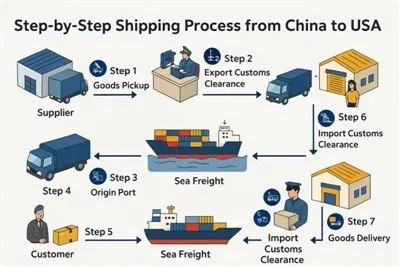
If you’re ready to stop juggling shipping headaches and get your goods to the US on time, feel free to reach out to my team. We can walk through your specific cargo, give you a transparent quote, and make sure your fast ocean freight LDP booking goes off without a hitch. No pressure, no sales pitch—just honest answers to whatever questions you have.
US LDP General Ship References:
- World Shipping Council. Ocean Freight Transit Time and Reliability Report. Annual Publication, 2024.
- Customs and Border Protection (CBP). Importer Documentation Requirements for Commercial Shipments. Public Resource, 2023.
- International Air Transport Association (IATA). LDP Shipping Guidelines for Cross-Border Trade. Industry Report, 2024.
- National Customs Brokers & Forwarders Association of America (NCBFAA). Best Practices for LDP Freight Booking. Practice Guide, 2023.
Tuoyuan International Logistics Co., Ltd.
As an experienced international logistics company in China, we provide high quality US LDP fast ocean freight service with competitive price. If you have any enquiry about customized US LDP fast ocean freight service, please feel free to email us. Also, quotation and pricelist are available.
Address: 1st Floor, Building 5, No.37, Jingshan Road, Beiyuan Street, Yiwu City, Jinhua City, Zhejiang Province, China
E-mail: info@topyounglog.com
WebSite: https://www.topyounglog.com/
