Hey there! I’m a supplier of slotted perforated metal, and today I’m gonna take you through the fascinating process of how slotted perforated metal is made. Slotted Perforated Metal

Starting with the Base Material
First things first, we need the right base material. Slotted perforated metal can be made from a variety of metals, each with its own unique properties. The most common ones are mild steel, stainless steel, and aluminum. Mild steel is a cost – effective option, great for general applications where corrosion isn’t a huge concern. Stainless steel, on the other hand, is super durable and resistant to rust, making it ideal for outdoor use or in environments with high humidity. Aluminum is lightweight and has excellent corrosion resistance, which is perfect for applications where weight is a factor, like in the aerospace or automotive industries.
We source high – quality metal sheets from reliable suppliers. These sheets come in different thicknesses and sizes, depending on the customer’s requirements. The thickness of the metal can range from as thin as 0.5mm to as thick as 12mm or more. The size of the sheets also varies, but common sizes are 4×8 feet or 5×10 feet.
The Perforation Process
Once we have the right metal sheets, it’s time to start the perforation process. There are a few different methods to create those slots, but the two most common ones are mechanical punching and laser cutting.
Mechanical Punching
Mechanical punching is a traditional and widely used method. It involves using a punching machine with a set of dies. The dies are specially designed to cut the slots in the metal sheet. The machine works by applying a high amount of force to push the die through the metal, creating the slots.
The first step in mechanical punching is to set up the machine. We need to make sure the die is properly aligned with the metal sheet. The operator loads the metal sheet onto the punching table and positions it precisely. Then, the machine starts punching the slots one by one. The spacing between the slots, their width, and length are all determined by the design of the die.
One of the advantages of mechanical punching is its speed. It can produce a large number of slots in a relatively short period. It’s also suitable for punching thick metal sheets. However, there are some limitations. The quality of the cut edges might not be as smooth as laser cutting, and there could be some burrs on the edges. We usually have to do some post – processing to remove these burrs.
Laser Cutting
Laser cutting is a more modern and precise method. It uses a high – powered laser beam to melt and vaporize the metal, creating the slots. The laser is controlled by a computer – numerical – control (CNC) system, which allows for very accurate and complex slot designs.
The process starts with designing the slot pattern using CAD (Computer – Aided Design) software. The design is then transferred to the CNC system of the laser cutting machine. The metal sheet is placed on the cutting table, and the laser beam starts moving along the programmed path, cutting the slots.
Laser cutting has several advantages. It produces very smooth edges with minimal burrs, so there’s less need for post – processing. It can also create very intricate slot patterns that might be difficult or impossible to achieve with mechanical punching. However, it’s generally slower and more expensive than mechanical punching, especially for large – scale production.
Design and Customization
At our company, we understand that different customers have different needs. That’s why we offer a high level of design and customization options. Customers can specify the size, shape, and spacing of the slots according to their requirements.
For example, in architectural applications, slotted perforated metal can be used for decorative purposes. Customers might want unique slot patterns, like geometric shapes or patterns that match the overall design of a building. In industrial applications, such as ventilation systems, the slot design needs to be optimized for air flow efficiency. We use advanced software to simulate the air flow through different slot designs and help customers choose the best one.
We also consider the functionality of the final product. If the slotted perforated metal is going to be used in a filtering application, the slot size needs to be carefully selected to ensure that only the desired particles can pass through. For sound – absorbing applications, the slot design can be adjusted to control the absorption of different frequencies of sound.
Post – Processing
After the perforation process, the slotted perforated metal usually goes through some post – processing steps.
Deburring
As I mentioned earlier, both mechanical punching and laser cutting can leave burrs on the edges of the slots. Deburring is the process of removing these burrs to make the edges smooth. We use various methods for deburring, such as grinding, sanding, or using chemical solutions.
Surface Treatment
Surface treatment is another important post – processing step. It can improve the corrosion resistance, appearance, and durability of the slotted perforated metal.
For mild steel, we often apply a coating of paint or powder coating. This helps to prevent rust and gives the metal a nice finish. Stainless steel can be passivated to enhance its corrosion resistance. Passivation involves treating the stainless steel with a chemical solution to remove any contaminants on the surface and form a protective oxide layer.
Aluminum can be anodized. Anodizing is an electrochemical process that creates a hard, protective oxide layer on the surface of the aluminum. It not only improves the corrosion resistance but also allows for the application of different colors.
Quality Control
Quality control is a crucial part of the manufacturing process. We have a strict quality control system in place to ensure that every piece of slotted perforated metal meets the highest standards.
We inspect the raw materials before they are used in production. We check the thickness, hardness, and chemical composition of the metal sheets to make sure they meet the specifications.
During the perforation process, we continuously monitor the machine parameters to ensure that the slots are being cut accurately. We also randomly sample the products and measure the slot dimensions, spacing, and edge quality.
After the post – processing, we inspect the surface finish and the overall appearance of the slotted perforated metal. We make sure that there are no defects, such as scratches, dents, or uneven coatings.
Available Applications
Slotted perforated metal has a wide range of applications across different industries.
In the construction industry, it’s used for facades, sunshades, and partitions. The slots can control the amount of sunlight and ventilation, while also adding an aesthetic appeal to the building.
In the automotive industry, slotted perforated metal is used for grilles, exhaust systems, and interior trim. It helps to improve the air flow and reduce noise.
In the food and beverage industry, it’s used for sieving and filtering applications. The slots can be designed to separate different sizes of particles, ensuring the quality of the final product.
Why Choose Our Slotted Perforated Metal
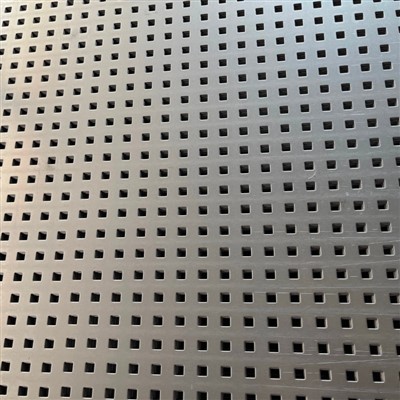
We pride ourselves on providing high – quality slotted perforated metal products. Our experienced team can help you with the design and customization process, ensuring that you get the exact product you need. We use the latest technology and manufacturing processes to ensure the accuracy and quality of our products.
Standard Expanded Metal If you’re in the market for slotted perforated metal, whether it’s for a small – scale project or a large – scale industrial application, we’d love to hear from you. We can offer competitive prices and fast delivery times. Contact us today to start discussing your requirements and get a quote. We’re here to help you find the perfect slotted perforated metal solution for your needs.
References
- "Metal Fabrication Handbook" – A comprehensive guide on metal processing methods.
- "Principles of Laser Cutting and Metal Punching" – Academic research on the two main perforation techniques.
- Industry reports on slotted perforated metal applications and market trends.
Anping Yilida Metal Wire Mesh Co., Ltd.
Anping Yilida Metal Wire Mesh Co., Ltd. is one of the most reliable slotted perforated metal manufacturers and suppliers in China, also supports customized service. Please feel free to buy bulk high quality slotted perforated metal made in China here from our factory.
Address: Wire Mesh Development Zone, Anping, Hebei Province, China
E-mail: sales@wiremesh-yg.cn
WebSite: https://www.yilidametal.com/
