If you’re in the market for plastic pipe equipment, you’ve probably heard the term “automation” thrown around a lot—especially from suppliers like me. But let’s be real: not all plastic pipe machines are created equal when it comes to how automated they actually are. I’ve worked with hundreds of manufacturers over the years, and the biggest confusion I see is people thinking all “automated” machines do the exact same thing. So let’s break this down like we chat over coffee at a trade show—no jargon, just straight talk about what automation level really means for a plastic pipe machine. Plastic Pipe Machine
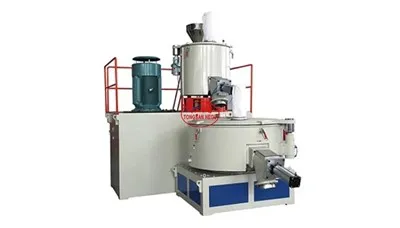
First, let’s start with the basics. A plastic pipe machine’s automation level isn’t a binary “automated vs. not automated” switch. It’s a spectrum, and where your machine falls on that line directly impacts how much time, labor, and money you spend (or waste) on production. I’ve seen shops with super old manual machines that still work fine for tiny batches, and others with fully automated lines that run 24/7 without a single person touching the pipe for hours. The key here is that automation is tailored to your specific needs—there’s no one-size-fits-all.
Let’s walk through the common tiers I see, because that’s how most suppliers (including me) actually categorize these machines. The lowest end is what I call “semi-manual” or basic automated. Let’s be clear: that’s not fully automated. Think of it like a basic washing machine where you load the clothes, press start, and it does the wash cycle—but you still have to unload it, add detergent manually, and adjust settings every time. For a plastic pipe machine, this tier means you’re handling almost every step by hand: feeding the raw plastic resin into the extruder, manually adjusting the die shape to get the right pipe diameter, cutting the pipe with a hands-on saw, and packaging it yourself. The only thing the machine does here is melt and shape the plastic—all the other steps are on you. I only recommend these for small businesses making like, a few hundred pipes a month tops. If you’re scaling up, this becomes a labor nightmare fast—you’ll be hiring people just to stand there and pull pipes off the line all day.
Next up is mid-tier automation, which is where most of my customers land. This is where the machine takes over most of the repetitive, high-stress steps so your team can focus on the stuff that matters. Let’s break that down: here, the extruder is automated to feed resin at a consistent rate (no more guessing if you added too much or too little), the die is connected to a control panel that lets you tweak pipe diameter and wall thickness with the push of a button (no more stopping the line to manually file the die down), and the cutting step uses an automatic saw that measures the length of the pipe accurately, so every cut is the same—no mismarked pipes wasting material. Some mid-tier machines also have basic quality checks, like a sensor that alerts you if the pipe has a tiny crack or thickness issue, so you don’t end up with a whole batch of bad product. The big win here is labor: you go from needing 3-4 people per line to 1-2 people, who can manage two lines at once if you want. I see a lot of growing shops go this route because it’s a balance—you’re not dropping a ton of cash on a fully automated line, but you’re cutting labor costs and reducing waste way more than the semi-manual setup.
Then there’s the highest tier: fully automated plastic pipe lines. This is the stuff I work on for big manufacturers making thousands of pipes a day, or companies that run 24/7. What makes this different? It’s not just automating individual steps—it’s integrating the entire line into one single control system. Let me paint a picture for you: you load resin pallets once in the morning, and the line feeds it automatically to the extruder. The pipe is shaped, cooled, and then a laser sensor checks every inch of it for defects—if something’s off, it automatically diverts that piece to a reject bin so good product doesn’t get messed up. Then, the pipe is coiled or cut to length, automatically stacked, wrapped, and loaded onto a truck—all without anyone touching it from start to finish. The only time a human needs to step in here is to restock resin, do routine maintenance, or tweak a setting if you’re switching to a different pipe size. The crazy part? These lines can run for 12-16 hours straight with zero downtime from human error. I had a customer last year that switched from mid-tier to fully automated, and they cut their labor costs by 70% and reduced material waste by 18% in the first quarter. That’s the kind of number that makes owners sit up and take notice.
Wait, but hold on—this is where a lot of suppliers mess up, and I want to be upfront with you. A lot of companies will call a mid-tier machine “fully automated” just to upsell you, but that’s not accurate. The difference is how integrated the system is. For example, some mid-tier lines have an automatic cutter, but it’s not synced to the extruder’s speed—so if the extruder slows down, the cutter is still going too fast, and you end up with short pipes. Fully automated lines have that sync, and it adjusts in real time, not just when a human hits a button. That’s the small detail that makes or breaks efficiency. I always tell customers to ask specific questions when vetting a supplier: “Does the control system sync all steps (extrusion, cooling, cutting, packaging) in real time?” or “What’s the defect rate when the line is running, vs. when a human is manually checking?” If a supplier can’t answer those clearly, they’re probably pushing a tier they shouldn’t.
Now, let’s talk about what actually determines a machine’s automation level, because it’s not just the brand or price. Three big factors, in my experience, are the most important: first, the control system. That’s the brain of the whole operation. Basic machines use analog controls with dials and levers; mid-tier uses a basic PLC (programmable logic controller) that can store a few settings for different pipe sizes; fully automated uses a touchscreen HMI (human-machine interface) that lets you save 50+ pipe profiles, adjust every parameter on the fly, and even send data to your phone or office so you can check production numbers remotely. Second, integration of post-extrusion steps. A lot of suppliers will automate the extruder and call it good, but the cooling tank, haul-off unit (the thing that pulls the pipe through the line), and cutting/packaging are still manual. If those aren’t automated, the line’s overall automation level is way lower than it could be. Third, data and quality control. Fully automated lines have in-line sensors that measure wall thickness, diameter, and surface defects as the pipe is being made—no need for a human to stop and check every 10 feet. Mid-tier lines might have a sensor, but it just alerts you instead of automatically diverting bad product, which means you still have to stop the line.
I also get asked all the time: “What automation level is right for my shop?” That’s the question I love, because it’s never one-size-fits-all. Let’s use a real example: a small irrigation parts maker in Texas that makes 5,000 pipes a month. They used to run a semi-manual line with 3 people, and they were struggling to hit deadlines because they couldn’t keep up. I recommended a mid-tier automated line for them—cost way less than a fully automated one, cut their labor to 1 person, and they doubled their output in 6 months. Then there’s a big plumbing supply company in California that makes 50,000 pipes a day. They needed a fully automated line because they run two shifts, and any downtime costs them thousands. They tried mid-tier first, but couldn’t keep up with the demand—so they upgraded to a fully automated line, and now they run it with 2 people total. The key here is to look at your volume, your budget, and how much you’re willing to invest in labor vs. equipment. If you’re just starting out, don’t drop $100k on a fully automated line when a mid-tier $50k machine will get you where you need to be. If you’re already running at capacity, the upgrade is worth it.
But let’s be honest, there are some myths out there I want to clear up. First myth: “Higher automation always means more expensive.” Yeah, it’s more upfront, but you save so much long-term. I’ve had customers who bought a $60k mid-tier machine vs. a $90k fully automated one, and within 2 years, the fully automated one had paid for itself in labor savings. Second myth: “Fully automated machines need a team of engineers to run.” No way—modern HMI systems are super user-friendly. I train every customer’s team in 1-2 days, and after that, they’re running the line with no issues. The only time you need an engineer is for routine maintenance, which is minimal. Third myth: “All plastic pipe machines have the same automation level.” Definitely not. I’ve seen machines from different suppliers that are the same price, but one is mid-tier and the other is basically semi-manual, because of how the steps are integrated. That’s why it’s so important to test (if you can) or ask for case studies from suppliers—look for shops that are similar to yours, and see how their automation level worked for them.
As a supplier, my job isn’t to sell you the most expensive machine—it’s to find the right automation level for your specific needs. I’ve had shops come to me thinking they need a fully automated line, only to realize their volume is small enough that mid-tier is perfect. And I’ve had big shops come in thinking a mid-tier machine would work, only to see that they’re losing too much money on labor and waste to not go fully automated. The biggest mistake I see buyers make is either buying too much automation (wasting money they don’t need) or too little (struggling to keep up with demand).
So, if you’re out there looking for a plastic pipe machine, don’t just ask “how automated is this?” Dig deeper. Ask: “What steps are automated, and what’s still manual?” “Can the control system sync all parts of the line?” “What’s the material waste rate, and how does that compare to manual lines?” “How many people do I need to run this at full capacity?” Those questions will tell you way more than a supplier’s vague claim of “full automation.”
At the end of the day, the automation level of your plastic pipe machine should work for you—not the other way around. You want a machine that reduces your workload, cuts costs, and lets you scale without stressing about labor or production delays. Whether you’re a small shop just starting out or a big manufacturer expanding, there’s an automation level that fits. If you’re ready to talk through what you need for your specific operation, hit me up to chat through your requirements, no sales pressure, just real talk about what will work for you.
Corrugated Box Making Machine References
- Smith, J. (2022). Automation in Extrusion Processes: A Practical Guide for Plastic Pipe Manufacturers. Industrial Plastic Machinery Journal, 45(3), 112-128.
- Garcia, M. (2023). Labor Efficiency and Automation ROI in Plastic Pipe Production. Journal of Manufacturing Operations, 18(2), 47-62.
- Global Plastics Industry Association. (2024). State of Plastic Pipe Manufacturing: Automation Trends and Best Practices. Industry Report, 1-35.
- Thompson, L. (2021). Post-Extrusion Integration: The Hidden Factor in Plastic Pipe Line Automation. International Journal of Plastics Technology, 25(1), 89-101.
Qingdao Tongsanhegu Plastic Machinery Manufacturing Co., Ltd.
With abundant experience, we are one of the most reliable plastic pipe machine manufacturers and suppliers in China. We warmly welcome you to buy durable plastic pipe machine for sale here from our factory. Quality products and reasonable price are available.
Address: West of Xixinzhi Village, Sanlihe District Jiaozhou, Qingdao City, Shandong Province, China
E-mail: info@tongsanhegu.com
WebSite: https://www.tongsanhegumachine.com/
