Hey there, LED Headlight
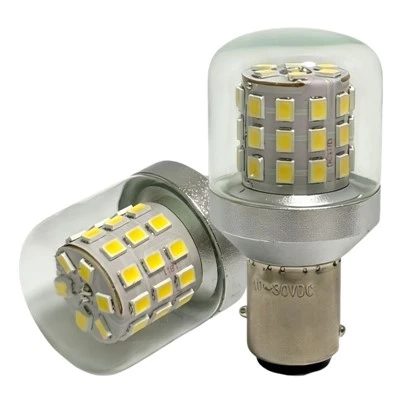
If you’ve ever sat behind the wheel at night, squinting at a poorly lit road or cursing a headlight that cuts out right when you need it most, you get how big of a difference good lighting makes. As an LED headlight supplier, I talk to car owners, mechanics, even small auto shop owners every single week asking the same question: “Do LED headlights need software updates?”
I know what you’re thinking—LEDs are just lightbulbs, right? They’re solid-state, no filaments to burn out, no moving parts. Why would they need a software update like my phone or my car’s infotainment system? For the longest time, I thought that too. Until I realized how much has changed in the last few years with LED tech for cars. Back when we first started out supplying basic LED headlights for entry-level models, most of our stuff was just plug-and-play. Screw them in, wire them up, and that’s it—they worked, they lit the road, they lasted way longer than halogens. But now? Things are way more complicated.
Let’s break this down like I would over a coffee with a customer, no jargon, just real talk. First off, what even is “software” in an LED headlight these days? A lot of people don’t get that modern high-end LEDs aren’t just a bulb with a diode. They have tiny built-in control units—we call them driver modules, but really, it’s a small computer. That little chip does a few key things: it regulates power, so the LED doesn’t burn out too fast, it adjusts brightness based on how much juice the car’s alternator is putting out, and sometimes it even syncs with your car’s other systems. Like, if your car has adaptive cruise control, that sensor that tracks the car in front of you—your headlights might dip automatically so you don’t blind that driver. Or they might pivot when you turn the wheel around a corner, so you can see the curb instead of just the white line. That’s all running on software in that little LED driver.
So why would you need to update that software? Let’s start with the most common reason: fixing glitches. Early on, when we were testing our newer adaptive headlights, we had a tiny issue—sometimes at very low speeds, like when you’re pulling into a driveway, the headlights would flicker for half a second. It wasn’t a safety hazard, but it was annoying. At first, we thought it was a power issue, but after testing a bunch of units, we realized it was a bug in the driver’s code. The software was overcompensating for low power draw by turning the LEDs on and off really quick, way faster than the human eye can catch, but it was noticeable if you were paying attention. A quick software update fixed that right up.
Then there’s compatibility. Cars are changing all the time, and not just new models. Older cars get aftermarket infotainment upgrades, people add new radar sensors for parking assist, even replacement alternators that put out different voltage. When that happens, the LED’s software might not talk to the car’s new systems right. I had a customer last month with a 2018 Ford F-150 who bought our adaptive LEDs and couldn’t get the high beam assist to work. Turns out, Ford changed their communication protocol in 2019, and our original software was built for the 2017 and older models. A quick over-the-air (OTA) update we released a month later fixed that. No need to send back the headlights, no need to hire a mechanic—just plug a little update tool into the OBD port, and done.
Wait, but what about safety? That’s the big one. Not long ago, we had a supplier of LED chips notice a flaw in their batch of high-power diodes. If the headlights ran at full brightness for more than an hour straight in 100+ degree heat, the software would throttle the brightness a little to keep the LEDs from overheating. But our original code didn’t account for how some pickup truck owners run their headlights all day at construction sites. We pushed an update that adjusted the temperature threshold, and also added a low-heat mode for idling, so the headlights wouldn’t stress the diodes. That’s not just a convenience— that’s preventing headlights from failing mid-drive, which could be dangerous on a dark highway.
But hold on, not all LED headlights need updates, right? Let’s be real here. If you’re buying our basic plug-and-play LED bulbs for a 10-year-old Honda Civic, chances are you’ll never need an update. Those units don’t have adaptive features, they just turn on when you turn your headlights on. No fancy software, nothing to glitch. But if you’re upgrading to our adaptive LED headlights for your newer SUV, or if you have a model with integrated tech like high beam assist or cornering lights? Yeah, you might need an update down the line.
I get why some people are skeptical. I’ve had customers say, “Why do I need to update something that’s supposed to be reliable?” And I don’t blame them—most of us are used to the “set it and forget it” mindset with car parts. But think about it like this: your phone’s camera got better after a software update, right? Same idea here. LED software updates aren’t just for fixing bugs. They can add features. Last year, we pushed an update that let our adaptive headlights sync with GPS. So when you turn onto a winding mountain road, the headlights pivot earlier, before you even turn the wheel, because the GPS knows the curve is coming up. That wasn’t in the original software—we added it after customers asked for it, and we were able to push the update for free.
Another thing: compliance. Car lighting regulations change every few years. Some states now require headlights that automatically dim for pedestrians, not just other cars. When those rules went into effect, we had to update the software on our new headlights to meet the new standards. If we didn’t, we couldn’t sell them in states that require that. And for customers who already had our headlights installed, we pushed a free update so they stayed legal. That’s a big one—no one wants to get a ticket because their headlights don’t meet current safety rules.
Now, I know what some of you are thinking: “This sounds complicated. Will I have to go to a dealer or a mechanic to get updates?” Nope. At our company, we make it as easy as possible. If your headlight needs an update, we’ll send you a free little tool—usually a tiny USB device that plugs into your car’s OBD port, same one mechanics use to read check engine lights. You plug it in, let it run for 10 minutes, and that’s it. No trips to the shop, no paying for labor. We even have step-by-step videos on our website, so if you’re handy, you can do it yourself. For newer cars with OTA capability, we can push updates straight to the headlight module while you’re parked in your driveway, no tools needed.
But I also want to be clear about the limitations. If you buy a cheap off-brand LED headlight from a random online store, they probably can’t do software updates. Their driver modules are super basic, they cut corners on the code, and they don’t have the infrastructure to push updates. That’s one reason we only supply our own line of LEDs—we stand behind them, and we want our customers to have support long after they buy. I’ve seen too many people buy a $20 set of LEDs that burn out in 6 months, and that’s just a waste of money. Our LEDs last 5-10 years, and the software support is part of that value.
Let me throw in a real example that just happened to a friend of mine. He’s a contractor who drives a 2021 Ram 2500, and he upgraded to our adaptive LED headlights last year. Back in March, he texted me panicking because his high beam assist stopped working. It was snowing, and he was driving home late from a job, and he was worried he’d have to buy new headlights. I told him to plug the OBD update tool in, and 10 minutes later, it was fixed. Turns out, the software glitched when the car’s snow mode activated, and a quick update resolved the conflict. He was back on the road, no hassle. That’s the stuff we build for.
So to circle back to the original question: Do LED headlights need software updates? It depends. If you have basic plug-and-play LEDs without any fancy features? Probably not. They’re just a light source, same as the halogen bulbs you replaced, minus the short lifespan. But if you have adaptive, smart, or high-end LED headlights with features like automatic dimming, cornering, GPS sync, or cruise control integration? Yeah, you will need software updates down the line. They’re not a set-it-and-forget-it part, but that’s a good thing—because updates mean your headlights get better, safer, and more compatible over time, not worse.
At the end of the day, your headlights are one of the most important safety features on your car. You need them to work when you’re driving at night, when it’s raining, when you’re on a dark back road. Software updates are just another way to make sure they do that, even as your car and the technology around you changes.
If you’re in the market for new LED headlights and you want something that works with your car, has support, and will keep getting updates, reach out to our team to chat. We can walk you through the different options, answer any questions you have, and help you find the right set for your vehicle. No pushy sales talk, no jargon—just real talk about what works for you and your car.

Thanks for reading, and stay safe out there on the road.
P28S Bulb References
- U.S. Department of Transportation, National Highway Traffic Safety Administration. (2020). Federal Motor Vehicle Safety Standard No. 108: Lamps, Reflective Devices, and Associated Equipment.
- Institute of Transportation Engineers. (2022). “Adaptive Front-Lighting Systems: Performance, Safety, and Regulatory Considerations.” ITE Journal.
- Lumina Semiconductor. (2023). “LED Driver Module Software Optimization for Automotive Extreme Environment Operation.” Technical White Paper.
- Society of Automotive Engineers. (2021). “Standard J1939-71: Diagnostic Communication, Part 71: Vehicle Network Management.”
BULBPLAN Co., Ltd.
As one of the most professional led headlight manufacturers and suppliers in China, our products have good reputation in the market. Please feel free to wholesale cheap led headlight for sale here and get pricelist from our factory. Quality products and reasonable price are available.
Address: No. 86 Zhongli Road, Nancheng Street, Dongguan City, Guangdong Province
E-mail: Alex@bulbplan.com
WebSite: https://www.nicebulbs.com/
