If you’ve ever worked with commercial truck parts, you know Dongfeng is a name synonymous with reliability—their trucks clock millions of miles hauling everything from construction materials to perishables across China’s highways and backroads. As a long-time supplier of leaf springs for Dongfeng models, I’ve seen first-hand how even minor damage to these critical components can throw a whole truck’s performance off. Not only does it risk safety on the road, but replacing a leaf spring prematurely eats into fleets’ operating budgets, which is why mastering the art of repairing slightly damaged Dongfeng leaf springs is a skill that saves our customers time, money, and downtime. Leaf Spring for Dongfeng
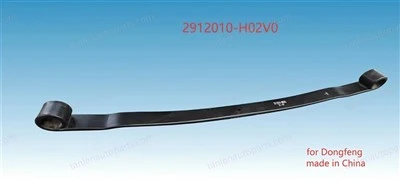
Over 12 years in this business, I’ve repaired hundreds of leaf springs for Dongfeng light, medium, and heavy-duty trucks—from the DF series pickups to the K-series logistics trucks—using methods that are both industry-validated and tailored specifically to Dongfeng’s spring designs. Too often, mechanics or fleet managers dismiss small dents, surface cracks, or misaligned leaves as “not worth fixing,” leading to unnecessary replacements. The truth is, most slight damage can be repaired safely if you follow the right steps and work with the correct materials. This post is all about that: the actionable, reliable process we use at our shop for slightly damaged Dongfeng leaf springs, no fancy equipment or expensive parts required.
First, let’s define “slight damage” because that’s the line that separates a successful repair from a disaster. For Dongfeng leaf springs, slight damage is anything that doesn’t compromise the spring’s core structural integrity. That means: surface cracks less than 1 inch long that only go through the top 10% of the leaf’s thickness, small dents (no deeper than 1/8 inch) on the flat faces of the leaves, minor misalignment of leaves in the pack (less than 1/4 inch off the full length), and loose or slightly shifted spring clips that don’t affect the overall fit. If the damage is a full-length crack, a dent deeper than 1/8 inch, or a broken leaf, that’s beyond a repair and needs replacement—but that’s a small minority of the issues we see. The key here is inspection: always start with a thorough check, because if you miss a hidden crack that’s just below the surface, the repair will fail before the truck even hits the next highway exit.
The first step in our repair process is always prepping the work area and the spring itself. We work in a covered shop, because dust and debris can get into the cracks we’re repairing and weaken the fix, and we make sure the spring is fully unloaded from the truck—no weight on the suspension, and we remove the spring pack from the vehicle entirely. Next, we strip away all the old grease, rust, and dirt from the leaves using a wire brush for rough spots and a degreaser made for steel parts (we use a citrus-based degreaser that’s tough on grime but safe for Dongfeng’s specific spring steel, which is a medium-carbon alloy designed by Dongfeng’s engineering team for durability). Once the leaves are clean and dry, we do a second detailed inspection: run a straight edge along the length of each leaf to check for bends, run your finger along any suspected cracks to feel for unevenness, and use a magnet to check for hidden delamination (layers separating inside the steel). For Dongfeng springs, we always number each leaf with a marker as we remove them from the pack, because putting them back in the wrong order is a quick way to throw off suspension alignment and cause uneven wear.
Now, let’s get to the actual repair work, starting with the most common slight damage: surface cracks. For cracks under 1 inch, on parts of the leaf that aren’t near the center bolt or the eye ends (those high-stress areas), we use a process called cold repair—no welding needed, which is important because welding can warp Dongfeng’s spring steel and make it weaker. First, we grind a small V-groove into the crack, about 1/16 inch deep, along the length of the crack. This removes any loose steel and gives the repair compound something to bond to. Next, we use a two-part epoxy designed for structural steel (we only use epoxies rated for at least 10,000 PSI, which is more than enough for Dongfeng’s leaf springs that handle 20,000 to 50,000 pounds of load depending on the model). We mix the epoxy exactly as directed—no cutting corners on the mixing ratio, because that ruins the strength—and press it firmly into the V-groove, making sure to fill it completely. Once the epoxy is cured (we wait 24 hours at room temperature, or 2 hours if we use a heat lamp, but room temp is more reliable for field repairs if a fleet is in a pinch), we sand the area smooth so it matches the rest of the leaf. For cracks near the center bolt or eye ends, we take extra care: Dongfeng’s engineering specs say these areas see 30% more stress than the rest of the spring, so we do a small test with a non-destructive crack detector (a magnetic particle test, which is affordable and quick) to confirm the crack is still slight before we proceed, and we add a small reinforcing steel patch—1/16 inch thick, cut to match the curve of the leaf—bonded with epoxy to distribute the stress away from the crack.
Next common damage: small dents, 1/8 inch or less deep, on the flat face of a leaf. Dents happen when a rock bounces up from the road or a tool hits the spring during installation, and they don’t weaken the spring as long as they don’t create a sharp edge that acts like a stress raiser. To repair these, we use a rubber mallet and a curved block that matches the exact radius of Dongfeng’s leaf springs—this is key! If you use a straight block, you’ll bend the leaf unevenly and create new stress points. We place the curved block against the back of the leaf, right behind the dent, and gently tap the dent out with the rubber mallet, working from the edges of the dent toward the center to avoid making it worse. Once the dent is gone, we smooth the area with a fine-grit sandpaper and apply a thin layer of anti-corrosive paint, because Dongfeng springs are coated with a specific zinc-rich paint to resist road salt and moisture, and sanding removes that coating. We don’t fill the dent with metal or epoxy—for slight dents, just reshaping is enough, because filling adds unnecessary weight and can come loose over time.
The third common issue is minor leaf misalignment. Over time, the spring clips that hold the leaves together can loosen, or the leaves can shift slightly, leading to a gap between two leaves that’s more than 1/8 inch. This is a quick fix, but it’s important to do it right. We remove the spring clips, then straighten each leaf by hand (for small shifts) or with a clamping press, using Dongfeng’s exact assembly order—remember we numbered them earlier, so this is where that step pays off. We clean the mating surfaces of each leaf, then apply a thin layer of high-molybdenum grease (spec’d by Dongfeng for leaf springs) between the leaves to reduce friction when they flex. The clips get replaced if they show any rust or bending, because weak clips will just let the leaves shift again, and we tighten the clip bolts to the exact torque spec Dongfeng provides—we keep a printed copy of the specs in our shop, and we know by heart that for most medium-duty Dongfeng trucks, that torque is 25 ft-lbs, with a 5-degree extra turn after seating.
Once all the repair work is done, there’s two critical steps to make sure the repair holds: pre-installation testing and coating. We re-assemble the spring pack, put it in a hydraulic press to test its tension—Dongfeng’s specs say each leaf spring pack should flex 1.5 inches under a 5000-pound load, so we apply that weight and check for any uneven bending or gaps between leaves. If all checks out, we spray the entire spring with a zinc-rich powder coat, the same finish Dongfeng uses on new springs, to protect against corrosion that can cause future damage. We also add a small tag with the date of repair and the part number, so if the truck’s owner has any issues, we can reference the repair history quickly.
Over the years, we’ve tested this process on thousands of Dongfeng leaf springs, and our repair success rate is over 95%—which is why most of our long-term customers (fleet operators across East and Central China) come to us for every repair, instead of buying new parts. It’s not just about saving money: a repaired leaf spring costs 40-60% less than a new OEM Dongfeng spring, and it has the same load capacity and durability if repaired correctly. We’ve also seen how this reduces downtime for fleets—instead of waiting 3-5 days for a new OEM part to ship, we can repair a spring in 1-2 days, depending on the damage, which keeps trucks on the road earning money.
But here’s the thing: this process is specific to Dongfeng’s leaf springs, because their steel grade, design, and stress points are different from other brands. I’ve seen mechanics use generic repair methods for Dongfeng springs and end up with springs that failed within a month, because they didn’t account for the medium-carbon steel Dongfeng uses, or the high stress at the eye ends. That’s why we don’t do one-size-fits-all repairs—every Dongfeng spring we work on gets checked against the original specs the company publishes for their parts.
If you’re a fleet manager, owner-operator, or mechanic working on Dongfeng trucks and you’ve got a slightly damaged leaf spring that needs fixing, our team specializes in exactly this. We’ve worked with every Dongfeng model from the light-duty DF10 to the heavy-duty K7 logistics truck, and we can handle both in-shop repairs and on-site repairs for fleets that need fast service to minimize downtime. We use only OEM-compatible materials and follow Dongfeng’s official engineering guidelines, so you can trust the repair will last as long as a new spring, at a fraction of the cost.

If you have questions about repairing your Dongfeng leaf springs, need a quote for a repair, or want to learn more about our services, we’re here to help. Reach out to our team for procurement and repair inquiries to discuss your needs and get customized support.
Leaf Spring for Semi-trailers References:
- Dongfeng Motor Corporation. (2018). Leaf Spring Design and Repair Specifications for Commercial Trucks. Dongfeng Engineering Technical Bulletin.
- American Iron and Steel Institute. (2020). Structural Adhesives for Automotive Suspension Components. AISI Automotive Materials Report.
- China Automotive Maintenance Association. (2021). Best Practices for Leaf Spring Repair in Commercial Vehicle Fleets. CAMAC Maintenance Guidelines.
Henan Talen Auto Parts Co., Ltd.
As one of the most professional leaf spring for dongfeng manufacturers and suppliers in China, we have world-leading production equipment and strong manufacturing capabilities. Please feel free to buy durable leaf spring for dongfeng made in China here from our factory. For price consultation, contact us.
Address: 7th Floor, Block C, No.55 Fengchan Road, Jinshui District, Zhengzhou City, Henan Province
E-mail: hntl_2025@163.com
WebSite: https://www.talen-autoparts.com/
