Hey there! I’m part of a vacuum system supplier, and today I wanna chat about the different types of vacuum systems out there. You know, vacuum systems play a huge role in so many industries, from manufacturing to research. They’re used to create and maintain a low-pressure environment, and there are quite a few types to choose from. Vacuum System
1. Rough Vacuum Systems
Let’s start with rough vacuum systems. These are the ones that can get you down to a moderate level of vacuum, usually in the range of around 1 to 1000 mbar. They’re the workhorses when it comes to tasks that don’t need an ultra – high vacuum.
One common type of pump used in rough vacuum systems is the rotary vane pump. It’s got these little vanes that rotate inside a chamber. As they spin, they trap air and push it out of the pump. Rotary vane pumps are pretty reliable and can handle a decent amount of gas flow. They’re often used in things like vacuum packaging machines. You know when you see those food packages with all the air sucked out? That’s likely a rough vacuum system with a rotary vane pump at work.
Another option for rough vacuum is the diaphragm pump. This type uses a flexible diaphragm that moves back and forth to create a vacuum. Diaphragm pumps are great because they’re oil – free. That means there’s no risk of oil contamination in the vacuum system. They’re commonly used in laboratories for applications like filtration and degassing.
2. Medium Vacuum Systems
Moving on to medium vacuum systems. These can achieve a vacuum in the range of about 10⁻³ to 1 mbar. To reach this level of vacuum, we usually need to combine different pumps.
A popular choice is the combination of a rotary vane pump (our rough vacuum friend) and a diffusion pump. The diffusion pump works by using a high – speed jet of hot oil or vapor to capture and remove gas molecules. The rotary vane pump pre – evacuates the system to a certain level, and then the diffusion pump takes it down to the medium vacuum range.
Medium vacuum systems are used in a bunch of industries. For example, in the semiconductor industry, they’re used during the manufacturing process of integrated circuits. The medium vacuum environment helps to prevent contamination and allows for precise deposition of thin films on the semiconductor wafers.
3. High Vacuum Systems
High vacuum systems can get you down to an even lower pressure, typically in the range of 10⁻⁷ to 10⁻³ mbar. These systems require more sophisticated pumps and setup.
One of the key pumps in high vacuum systems is the turbomolecular pump. It’s a super – fast rotating pump that uses a series of blades to push gas molecules out of the system. Turbomolecular pumps are really good at achieving high pumping speeds, but they need to be backed by a rough vacuum pump, like a rotary vane pump, to work properly.
High vacuum systems are crucial in research and development. For instance, in particle accelerators, high vacuum is necessary to prevent the particles from colliding with gas molecules and losing energy. In surface analysis techniques like X – ray photoelectron spectroscopy (XPS), a high vacuum environment is needed to get accurate results.
4. Ultra – High Vacuum Systems
Ultra – high vacuum (UHV) systems are at the top of the food chain. They can reach pressures as low as 10⁻¹² to 10⁻⁷ mbar. Achieving an ultra – high vacuum is no easy feat.
One of the main pumps used in UHV systems is the ion pump. Ion pumps work by ionizing gas molecules and then collecting them on a surface. They can operate continuously without the need for a backing pump, once the system is already in a high vacuum state.
UHV systems are used in some of the most advanced scientific research. For example, in studies of atomic and molecular physics, where researchers want to study the behavior of individual atoms and molecules in a near – perfect vacuum. They’re also used in the production of high – end optical components, like mirrors for telescopes, where even the slightest amount of contamination can affect the performance.
5. Cryogenic Vacuum Systems
Cryogenic vacuum systems are a bit different. They use the principle of low temperature to create a vacuum. These systems cool down the surfaces inside the vacuum chamber to extremely low temperatures, usually using liquid nitrogen or liquid helium.
At these low temperatures, gas molecules condense on the cold surfaces, effectively reducing the pressure in the chamber. Cryogenic vacuum systems can achieve very high levels of vacuum and are often used in applications where a clean and ultra – high vacuum is required, such as in space simulation chambers. They’re used to mimic the conditions of outer space, which is a near – perfect vacuum.
Why Choose Our Vacuum Systems?
Now, I know there are a lot of vacuum system suppliers out there, but let me tell you why you should consider us. We’ve been in the game for a long time, and we really understand the ins and outs of different vacuum systems.
Our products are made with high – quality materials, so you can count on them to be reliable. We also offer a wide range of options, whether you need a rough vacuum system for a simple packaging application or an ultra – high vacuum system for advanced research.
We’ve got a great team of experts who can help you choose the right system for your specific needs. And if you run into any problems, we’re always there to provide support and maintenance.
Time to Make a Decision
If you’re in the market for a vacuum system, it’s time to think about what type would be best for your application. Are you looking for something for a small – scale laboratory experiment, or do you need a large – scale system for an industrial manufacturing process?
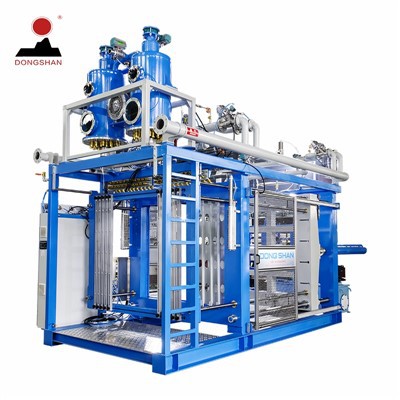
EPS Shape Molding Machine We’re here to help you make that decision. Whether you need to learn more about the different types of vacuum systems, get a quote, or just have some questions, don’t hesitate to reach out to us. We’re happy to have a chat with you and figure out the best vacuum system solution for you. So, get in touch with us, and let’s start talking about your vacuum system needs!
References
- "Vacuum Technology: Fundamentals and Applications" – A great book that covers all aspects of vacuum systems and their applications.
- "Handbook of Vacuum Physics" – This handbook provides in – depth knowledge about different types of vacuum pumps and systems.
- Industry journals such as "Vacuum Science and Technology" which often publish research and case studies on various vacuum systems.
Hangzhou Fuyang Dongshan Plastic Machinery Co., Ltd.
Hangzhou Fuyang Dongshan Plastic Machinery Co., Ltd. is one of the most professional vacuum system manufacturers and suppliers in China, featured by quality products and low price. Please feel free to wholesale advanced vacuum system made in China here and get quotation from our factory. Customized orders are welcome.
Address: 101 Guanting, Baiqian Villige, Luzhu Town, Fuyang District, Hangzhou City, Zhejiang Province, China
E-mail: xu@dong-shan.cn
WebSite: https://www.epseppmachinery.com/
